

5 Contract Clauses Every Freelancer Should Never Skip
Scope, payment triggers, IP ownership, kill fees, and late-payment penalties — the clauses freelance contracts fail from omitting.

What Is The Difference Between A Code Editor And An IDE Or A Text Editor?
Lorem ipsum dolor sit amet, consectetur adipiscing elit lobortis arcu enim urna adipiscing praesent velit viverra sit semper lorem eu cursus vel hendrerit elementum morbi curabitur etiam nibh justo, lorem aliquet donec sed sit mi dignissim at ante massa mattis.
- Neque sodales ut etiam sit amet nisl purus non tellus orci ac auctor
- Adipiscing elit ut aliquam purus sit amet viverra suspendisse potent i
- Mauris commodo quis imperdiet massa tincidunt nunc pulvinar
- Adipiscing elit ut aliquam purus sit amet viverra suspendisse potenti
Pros and Cons of Using These Editors:
Vitae congue eu consequat ac felis placerat vestibulum lectus mauris ultrices cursus sit amet dictum sit amet justo donec enim diam porttitor lacus luctus accumsan tortor posuere praesent tristique magna sit amet purus gravida quis blandit turpis.
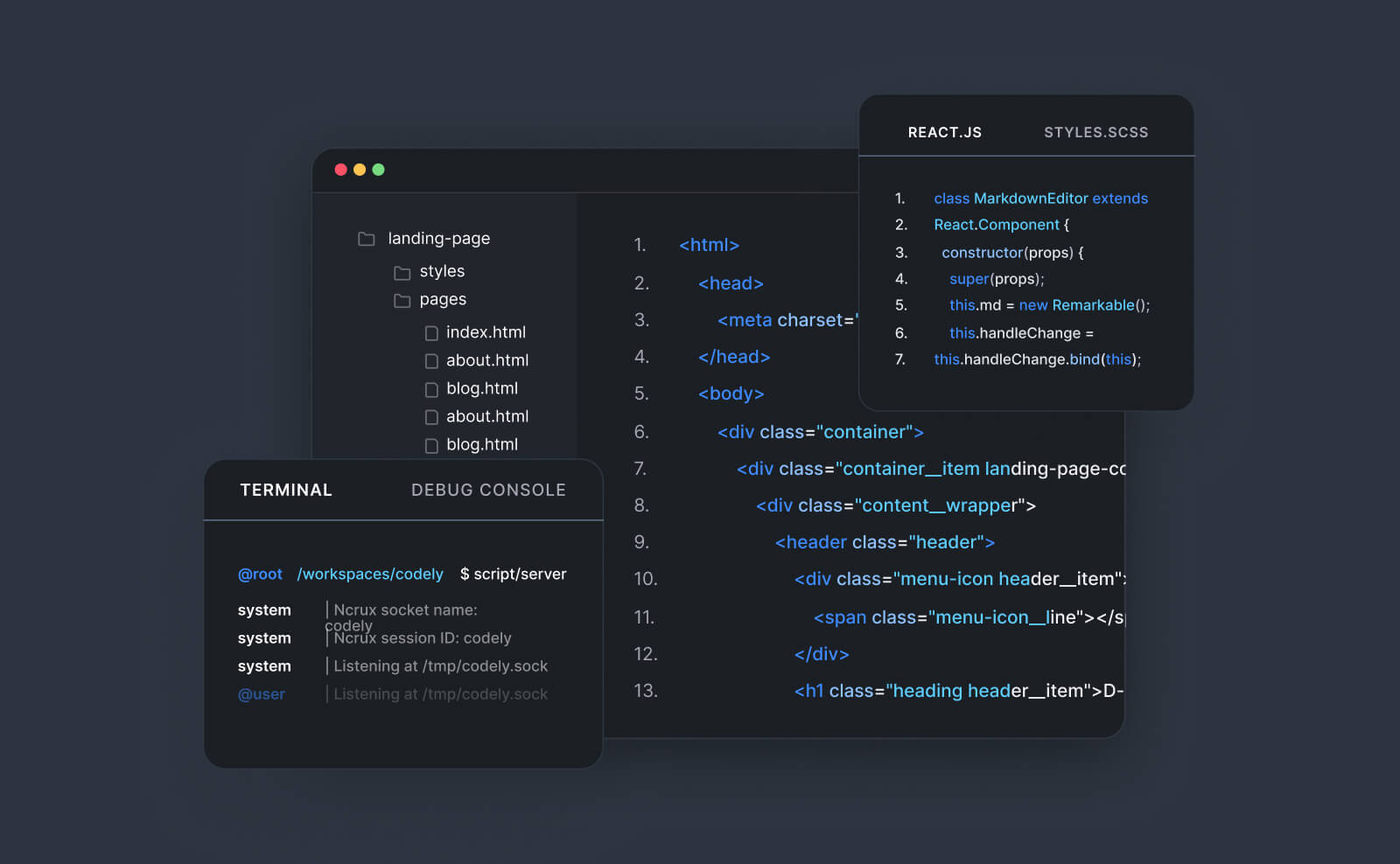
#1 VS Code by Microsoft
At risus viverra adipiscing at in tellus integer feugiat nisl pretium fusce id velit ut tortor sagittis orci a scelerisque purus semper eget at lectus urna duis convallis. Porta nibh venenatis cras sed felis eget neque laoreet suspendisse interdum consectetur libero id faucibus nisl donec pretium vulputate sapien nec sagittis aliquam nunc lobortis mattis aliquam faucibus purus in.
- Neque sodales ut etiam sit amet nisl purus non tellus orci ac auctor
- Adipiscing elit ut aliquam purus sit amet viverra suspendisse potenti
- Mauris commodo quis imperdiet massa tincidunt nunc pulvinar
- Adipiscing elit ut aliquam purus sit amet viverra suspendisse potenti
#2 Sublime Text Editor
Nisi quis eleifend quam adipiscing vitae aliquet bibendum enim facilisis gravida neque. Velit euismod in pellentesque massa placerat volutpat lacus laoreet non curabitur gravida odio aenean sed adipiscing diam donec adipiscing tristique risus. amet est placerat in egestas erat imperdiet sed euismod nisi.
“Nisi quis eleifend quam adipiscing vitae aliquet bibendum enim facilisis gravida neque velit euismod in pellentesque massa placerat”
Wrapping up the article
Eget lorem dolor sed viverra ipsum nunc aliquet bibendum felis donec et odio pellentesque diam volutpat commodo sed egestas aliquam sem fringilla ut morbi tincidunt augue interdum velit euismod eu tincidunt tortor aliquam nulla facilisi aenean sed adipiscing diam donec adipiscing ut lectus arcu bibendum at varius vel pharetra nibh venenatis cras sed felis eget.
Most freelance contracts fail from omission, not bad terms
The freelance contracts that cause the most trouble aren't the ones with unfair terms — they're the ones missing a clause entirely, so when a real-world situation comes up, there's simply nothing in the document that addresses it. Here are the five that matter most.
1. A specific, written scope
"Website redesign" is not a scope. "Redesign of the 6 pages listed in Appendix A, including up to 2 rounds of revisions per page" is. The more specific the scope, the less room there is for either side to disagree later about what was actually promised.
2. Payment terms, including what triggers each payment
Beyond the total price, a strong contract specifies exactly what triggers each payment — a deposit due at signing, a milestone payment due at a specific deliverable, a final payment due at completion. Vague terms like "paid upon completion" leave "completion" open to interpretation.
3. IP ownership and when it transfers
By default in many jurisdictions, a freelancer retains ownership of their work until it's explicitly transferred — which often surprises clients who assume payment automatically means ownership. Stating explicitly that IP transfers upon final payment (not upon delivery) protects you if a client uses the work before paying in full.
4. A kill fee for early termination
Projects get cancelled — budgets change, priorities shift, companies get acquired. A kill fee clause (a percentage of the remaining contract value owed if the client cancels partway through) protects the time you've already committed and often already turned down other work for.
5. A late-payment penalty, stated as a specific number
"Late payments may incur additional fees" is weak because it's vague. "Payments more than 10 days late incur a 1.5% monthly late fee" is specific, enforceable, and — just as importantly — signals to the client upfront that you take your payment terms seriously.
"Every one of these clauses exists because a freelancer, somewhere, learned the hard way what happens without it. You don't have to learn it the same way."
None of these need to feel adversarial
A contract with these five clauses isn't a sign of distrust — it's standard professional practice, and most legitimate clients expect to see them. The freelancers who skip them aren't protecting the relationship by being informal; they're just deferring the hard conversation to whenever the first disagreement happens, when it's much harder to resolve.
Contractly Pro's contract templates include these core protections by default, generated directly from your quote. Try it free →
Emile Ndagijimana
Senior Full-Stack Engineer based in France with 10+ years building enterprise systems for insurance, consulting, and international organisations. Founder of Contractly Pro — a contract management SaaS built end-to-end in .NET and Angular.