

Batch Your Business Tasks: A Freelancer's Guide to Fewer Context Switches
Time-blocking, tool consolidation, and the two different kinds of context-switching cost most freelancers only address one of.

What Is The Difference Between A Code Editor And An IDE Or A Text Editor?
Lorem ipsum dolor sit amet, consectetur adipiscing elit lobortis arcu enim urna adipiscing praesent velit viverra sit semper lorem eu cursus vel hendrerit elementum morbi curabitur etiam nibh justo, lorem aliquet donec sed sit mi dignissim at ante massa mattis.
- Neque sodales ut etiam sit amet nisl purus non tellus orci ac auctor
- Adipiscing elit ut aliquam purus sit amet viverra suspendisse potent i
- Mauris commodo quis imperdiet massa tincidunt nunc pulvinar
- Adipiscing elit ut aliquam purus sit amet viverra suspendisse potenti
Pros and Cons of Using These Editors:
Vitae congue eu consequat ac felis placerat vestibulum lectus mauris ultrices cursus sit amet dictum sit amet justo donec enim diam porttitor lacus luctus accumsan tortor posuere praesent tristique magna sit amet purus gravida quis blandit turpis.
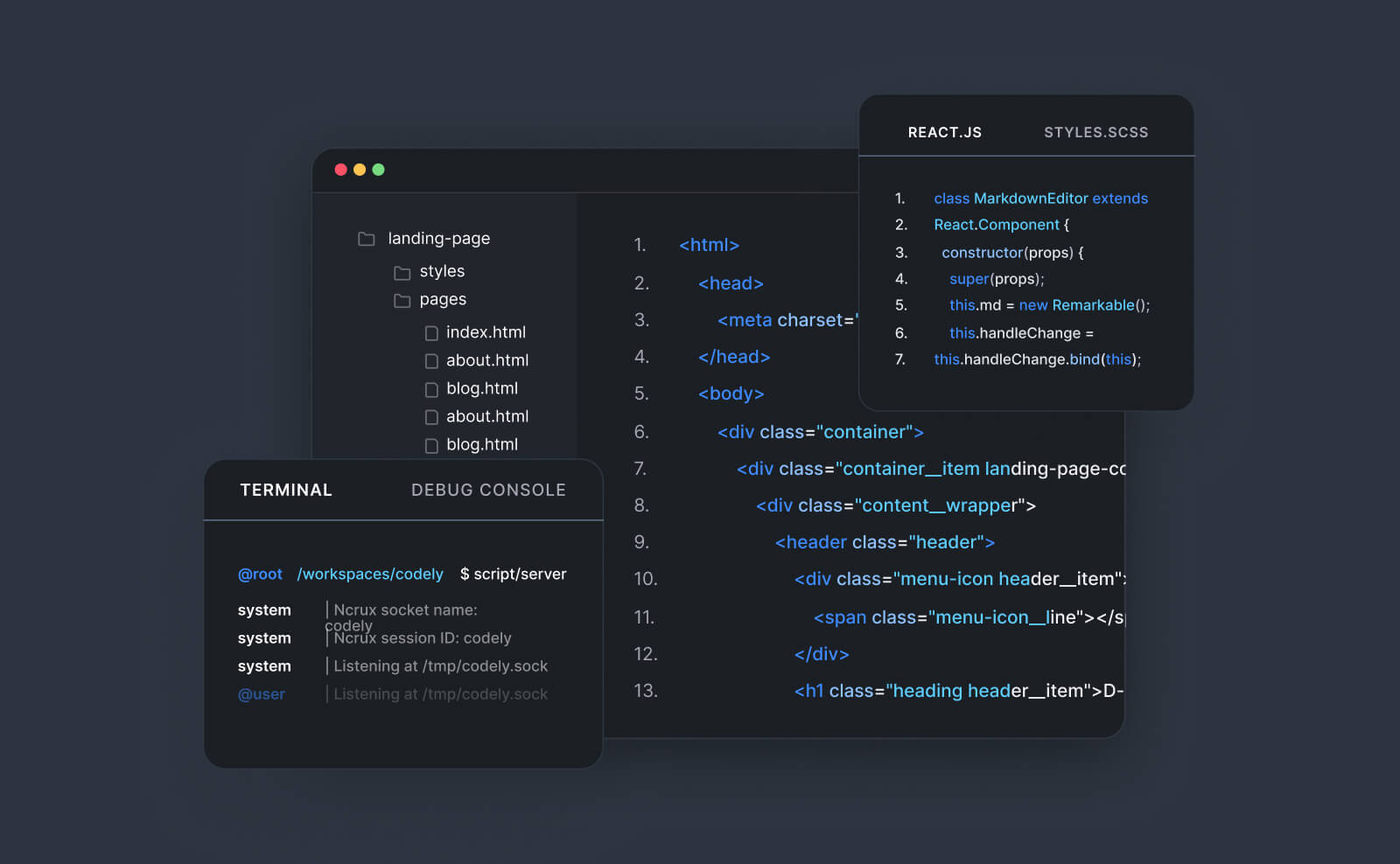
#1 VS Code by Microsoft
At risus viverra adipiscing at in tellus integer feugiat nisl pretium fusce id velit ut tortor sagittis orci a scelerisque purus semper eget at lectus urna duis convallis. Porta nibh venenatis cras sed felis eget neque laoreet suspendisse interdum consectetur libero id faucibus nisl donec pretium vulputate sapien nec sagittis aliquam nunc lobortis mattis aliquam faucibus purus in.
- Neque sodales ut etiam sit amet nisl purus non tellus orci ac auctor
- Adipiscing elit ut aliquam purus sit amet viverra suspendisse potenti
- Mauris commodo quis imperdiet massa tincidunt nunc pulvinar
- Adipiscing elit ut aliquam purus sit amet viverra suspendisse potenti
#2 Sublime Text Editor
Nisi quis eleifend quam adipiscing vitae aliquet bibendum enim facilisis gravida neque. Velit euismod in pellentesque massa placerat volutpat lacus laoreet non curabitur gravida odio aenean sed adipiscing diam donec adipiscing tristique risus. amet est placerat in egestas erat imperdiet sed euismod nisi.
“Nisi quis eleifend quam adipiscing vitae aliquet bibendum enim facilisis gravida neque velit euismod in pellentesque massa placerat”
Wrapping up the article
Eget lorem dolor sed viverra ipsum nunc aliquet bibendum felis donec et odio pellentesque diam volutpat commodo sed egestas aliquam sem fringilla ut morbi tincidunt augue interdum velit euismod eu tincidunt tortor aliquam nulla facilisi aenean sed adipiscing diam donec adipiscing ut lectus arcu bibendum at varius vel pharetra nibh venenatis cras sed felis eget.
Context switching is more expensive than the task itself
Research on task-switching consistently finds the same thing: the cost isn't the individual interruption, it's the time spent re-orienting afterward — remembering where you were, what you were thinking, what the next step was. For freelancers juggling client work, admin, and business development in the same day, that re-orientation cost adds up to a significant, mostly invisible tax on actual productive time.
Time-blocking: grouping similar work, not just scheduling it
Time-blocking is often misunderstood as just "put tasks on a calendar." The part that actually reduces context-switching cost is grouping tasks by type of thinking required, not just by deadline. Deep client work, quick admin tasks, and communication each use a different mode of attention — mixing them throughout the day means constantly shifting modes, which is the expensive part.
- Deep work blocks — client deliverables, focused creative or technical work, protected from interruption
- Admin blocks — quoting, invoicing, follow-ups, batched into one or two sessions a week (see: the weekly admin routine)
- Communication blocks — email and messages checked at set times, not continuously throughout the day
Tool consolidation: the other half of the problem
Time-blocking reduces how often you switch between types of work. It doesn't fix a second, equally costly kind of switching: moving between five different apps to do one connected task, like quoting a client in one tool, drafting their contract in another, and invoicing them in a third. Each app switch carries its own re-orientation cost — different login, different interface, different mental model of where things stand.
Consolidating quoting, contracts, invoicing, and payments into one tool doesn't just save clicks. It removes an entire category of context-switching that time-blocking alone can't touch, because the switching happens within a single task, not between tasks.
"Time-blocking fixes switching between different kinds of work. Tool consolidation fixes switching within the same piece of work. Most freelancers only address the first one."
Putting both together
The freelancers with the least chaotic weeks usually aren't working fewer hours — they're spending a much higher percentage of those hours in a single, uninterrupted mode of attention, on tasks handled inside one connected system instead of five disconnected ones. Time-blocking gets you the first part. Tool consolidation gets you the second.
Contractly Pro keeps quotes, contracts, invoices, and payments in one place, so an admin block doesn't turn into five app switches. Try it free →
Emile Ndagijimana
Senior Full-Stack Engineer based in France with 10+ years building enterprise systems for insurance, consulting, and international organisations. Founder of Contractly Pro — a contract management SaaS built end-to-end in .NET and Angular.