

Building Contractly Pro Solo: Lessons From Shipping as a One-Person Team
The trade-offs of solo building — what got cut, what got prioritized, and why the smallest useful version of the core workflow shipped first.

What Is The Difference Between A Code Editor And An IDE Or A Text Editor?
Lorem ipsum dolor sit amet, consectetur adipiscing elit lobortis arcu enim urna adipiscing praesent velit viverra sit semper lorem eu cursus vel hendrerit elementum morbi curabitur etiam nibh justo, lorem aliquet donec sed sit mi dignissim at ante massa mattis.
- Neque sodales ut etiam sit amet nisl purus non tellus orci ac auctor
- Adipiscing elit ut aliquam purus sit amet viverra suspendisse potent i
- Mauris commodo quis imperdiet massa tincidunt nunc pulvinar
- Adipiscing elit ut aliquam purus sit amet viverra suspendisse potenti
Pros and Cons of Using These Editors:
Vitae congue eu consequat ac felis placerat vestibulum lectus mauris ultrices cursus sit amet dictum sit amet justo donec enim diam porttitor lacus luctus accumsan tortor posuere praesent tristique magna sit amet purus gravida quis blandit turpis.
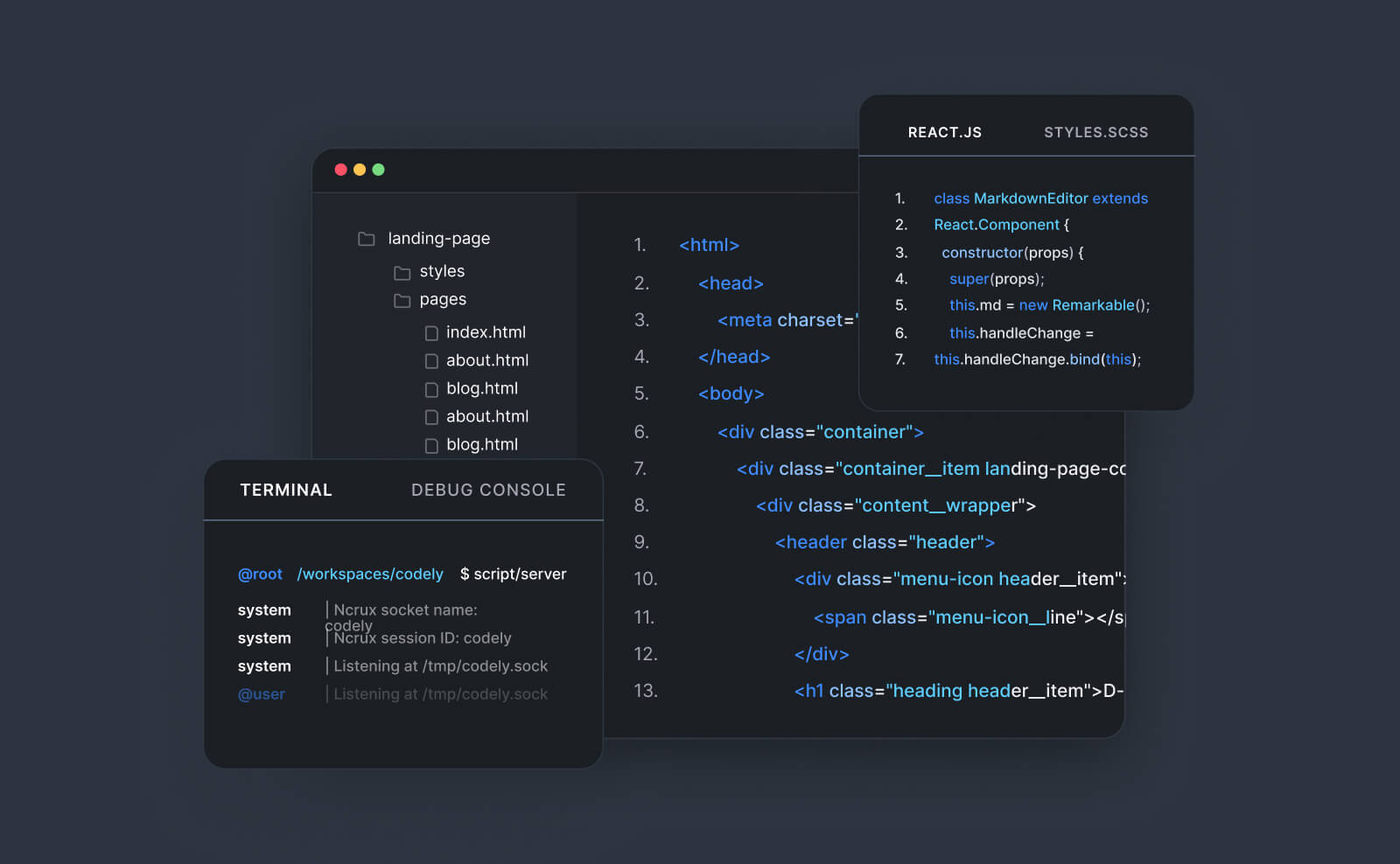
#1 VS Code by Microsoft
At risus viverra adipiscing at in tellus integer feugiat nisl pretium fusce id velit ut tortor sagittis orci a scelerisque purus semper eget at lectus urna duis convallis. Porta nibh venenatis cras sed felis eget neque laoreet suspendisse interdum consectetur libero id faucibus nisl donec pretium vulputate sapien nec sagittis aliquam nunc lobortis mattis aliquam faucibus purus in.
- Neque sodales ut etiam sit amet nisl purus non tellus orci ac auctor
- Adipiscing elit ut aliquam purus sit amet viverra suspendisse potenti
- Mauris commodo quis imperdiet massa tincidunt nunc pulvinar
- Adipiscing elit ut aliquam purus sit amet viverra suspendisse potenti
#2 Sublime Text Editor
Nisi quis eleifend quam adipiscing vitae aliquet bibendum enim facilisis gravida neque. Velit euismod in pellentesque massa placerat volutpat lacus laoreet non curabitur gravida odio aenean sed adipiscing diam donec adipiscing tristique risus. amet est placerat in egestas erat imperdiet sed euismod nisi.
“Nisi quis eleifend quam adipiscing vitae aliquet bibendum enim facilisis gravida neque velit euismod in pellentesque massa placerat”
Wrapping up the article
Eget lorem dolor sed viverra ipsum nunc aliquet bibendum felis donec et odio pellentesque diam volutpat commodo sed egestas aliquam sem fringilla ut morbi tincidunt augue interdum velit euismod eu tincidunt tortor aliquam nulla facilisi aenean sed adipiscing diam donec adipiscing ut lectus arcu bibendum at varius vel pharetra nibh venenatis cras sed felis eget.
There is no "not my department" when you're the whole department
Building Contractly Pro solo means every decision — architecture, UI copy, which feature ships this month, which support email gets answered first — runs through one person. That sounds exhausting, and some days it is, but it also removes an entire category of friction that slows down larger teams: there's no coordination tax. If I decide something needs to change, it changes. There's no ticket, no sprint planning meeting, no waiting on another team's roadmap.
The trade-off is that everything I don't prioritize simply doesn't happen. There's no one else picking up the slack. That constraint has shaped almost every real decision I've made building this product.
What got cut, on purpose
Early on I sketched a much bigger version of Contractly Pro — team accounts, client portals with their own login, a marketplace for contract templates, deep analytics on quote-to-close rates. All of that is still on the roadmap in some form. None of it shipped first.
What shipped first was the narrowest possible version of the core loop: create a quote, convert it to a contract, get it signed, turn it into an invoice, get paid. That's it. No dashboards, no analytics, no collaboration features. The logic was simple — if the core loop isn't solid, none of the surrounding features matter, and if it is solid, everything else can be added without redesigning the foundation.
- Cut: multi-seat team accounts (v1 is single-user by design)
- Cut: a public template marketplace
- Cut: deep reporting and analytics dashboards
- Kept, non-negotiable: sequential invoice numbering, e-signature validity, and payment record accuracy
The hardest part isn't the code
I write software for a living, so the engineering side of building a SaaS was the most predictable part. The harder part has been everything around it: writing UI copy that a freelancer with no patience for jargon will actually understand, deciding what "done" means for a feature with no product manager to sign off on it, and resisting the urge to keep polishing something instead of shipping it and learning from real usage.
"Solo building doesn't mean doing everything yourself forever. It means being deliberate about what you do first, because there's no team to catch what you don't."
The other hard part is support. Every bug report, every "how do I do X" email, every piece of feedback comes to me directly. That's a lot more work than having a support team — but it's also the fastest feedback loop I've ever had on a piece of software. When a real freelancer tells you the contract-signing flow is confusing, you don't hear about it three quarters later in an NPS report. You hear about it that afternoon, and you can usually ship a fix within the week.
What I'd tell someone starting the same thing
Pick the smallest version of the core workflow that's actually useful on its own, ship it, and get it in front of real users before you're comfortable with how unfinished it feels. Everything I've built after that first core loop has been informed by watching actual freelancers use it — not by guessing what they'd want from a spec I wrote alone.
Emile Ndagijimana
Senior Full-Stack Engineer based in France with 10+ years building enterprise systems for insurance, consulting, and international organisations. Founder of Contractly Pro — a contract management SaaS built end-to-end in .NET and Angular.