

How to Price Your Freelance Work Without Underselling Yourself
Common pricing mistakes, value-based vs. hourly pricing, and how to actually raise your rates with clients you already have.

What Is The Difference Between A Code Editor And An IDE Or A Text Editor?
Lorem ipsum dolor sit amet, consectetur adipiscing elit lobortis arcu enim urna adipiscing praesent velit viverra sit semper lorem eu cursus vel hendrerit elementum morbi curabitur etiam nibh justo, lorem aliquet donec sed sit mi dignissim at ante massa mattis.
- Neque sodales ut etiam sit amet nisl purus non tellus orci ac auctor
- Adipiscing elit ut aliquam purus sit amet viverra suspendisse potent i
- Mauris commodo quis imperdiet massa tincidunt nunc pulvinar
- Adipiscing elit ut aliquam purus sit amet viverra suspendisse potenti
Pros and Cons of Using These Editors:
Vitae congue eu consequat ac felis placerat vestibulum lectus mauris ultrices cursus sit amet dictum sit amet justo donec enim diam porttitor lacus luctus accumsan tortor posuere praesent tristique magna sit amet purus gravida quis blandit turpis.
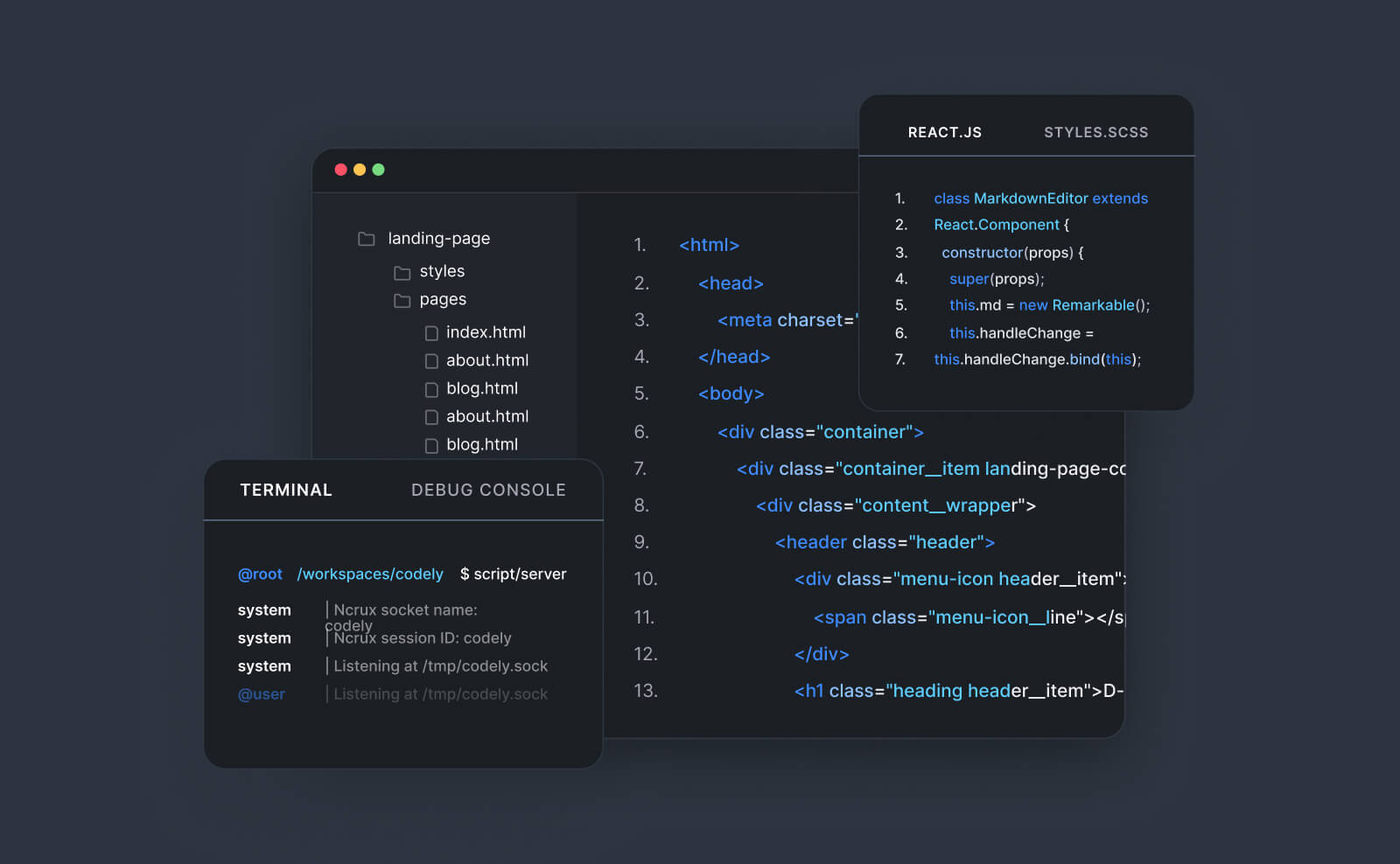
#1 VS Code by Microsoft
At risus viverra adipiscing at in tellus integer feugiat nisl pretium fusce id velit ut tortor sagittis orci a scelerisque purus semper eget at lectus urna duis convallis. Porta nibh venenatis cras sed felis eget neque laoreet suspendisse interdum consectetur libero id faucibus nisl donec pretium vulputate sapien nec sagittis aliquam nunc lobortis mattis aliquam faucibus purus in.
- Neque sodales ut etiam sit amet nisl purus non tellus orci ac auctor
- Adipiscing elit ut aliquam purus sit amet viverra suspendisse potenti
- Mauris commodo quis imperdiet massa tincidunt nunc pulvinar
- Adipiscing elit ut aliquam purus sit amet viverra suspendisse potenti
#2 Sublime Text Editor
Nisi quis eleifend quam adipiscing vitae aliquet bibendum enim facilisis gravida neque. Velit euismod in pellentesque massa placerat volutpat lacus laoreet non curabitur gravida odio aenean sed adipiscing diam donec adipiscing tristique risus. amet est placerat in egestas erat imperdiet sed euismod nisi.
“Nisi quis eleifend quam adipiscing vitae aliquet bibendum enim facilisis gravida neque velit euismod in pellentesque massa placerat”
Wrapping up the article
Eget lorem dolor sed viverra ipsum nunc aliquet bibendum felis donec et odio pellentesque diam volutpat commodo sed egestas aliquam sem fringilla ut morbi tincidunt augue interdum velit euismod eu tincidunt tortor aliquam nulla facilisi aenean sed adipiscing diam donec adipiscing ut lectus arcu bibendum at varius vel pharetra nibh venenatis cras sed felis eget.
The pricing mistake almost every freelancer makes early on
Most freelancers start by pricing themselves the way they'd price a job application: competitively, a little low, "reasonable" for someone still building a portfolio. That instinct makes sense at the very start, but it becomes a trap the moment it turns into a habit. Once a client anchors on your low rate, raising it later feels like asking for a favor instead of correcting a starting mistake.
The second most common mistake is pricing purely by the hour without ever stepping back to ask what the work is actually worth to the client. An hourly rate punishes you for getting faster and better at your job — the more efficient you become, the less you earn for the same outcome.
Value-based pricing vs. hourly: what actually changes
Value-based pricing means pricing the outcome, not the time it takes you to produce it. A landing page that will plausibly generate six figures in revenue for a client is not priced the same as a hobby blog's landing page, even if both take you six hours to build.
This doesn't mean abandoning hourly rates entirely — they're still useful for scoping unclear or open-ended work, and for internal sanity-checking whether a value-based quote is actually worth your time. The shift is in what you lead with when quoting a client: start from the value of the outcome, and use your hourly rate as a private floor, not the number you present.
- Ask what the project is worth to the client's business before naming a number
- Quote a project fee, not a time estimate, whenever the scope is well-defined enough to do so
- Keep your real hourly rate private — it's your floor, not your pitch
How to actually raise your rates with existing clients
This is the part that stalls most freelancers, because it feels like risking a relationship that's already working. A few things make it easier in practice:
Give notice, not a surprise
A rate increase announced with 30–60 days' notice, tied to a natural point like a contract renewal or the start of a new project, reads as professional. The same increase sprung on an existing invoice reads as a breach of trust.
Anchor it to something real
"My rates are increasing to reflect [growing demand / expanded scope / market rates]" is a complete sentence. You don't owe a client a defense of your value — a short, confident statement is more persuasive than a long justification.
Expect some clients to leave — and plan for it
Not every client will accept an increase, and that's fine. The clients who push back hardest on a modest, well-communicated increase are often the same ones who were underpaying you the most relative to the value you deliver.
"If no client has ever pushed back on your rate, that's not proof your pricing is right — it's usually proof it's too low."
Where this connects to the rest of your business
Pricing confidently only works if the rest of your process backs it up: a clear quote, a real contract, a professional invoice, and a payment process the client trusts. Underselling isn't just about the number — it's often a symptom of an informal process that makes clients feel like they're negotiating with a hobbyist instead of a business.
Managing this by hand across five different tools makes it harder to project that professionalism consistently. Contractly Pro handles quotes, contracts, invoices, and payments in one place. Try it free →
Emile Ndagijimana
Senior Full-Stack Engineer based in France with 10+ years building enterprise systems for insurance, consulting, and international organisations. Founder of Contractly Pro — a contract management SaaS built end-to-end in .NET and Angular.