

Should Freelancers Blog? Here's the Actual ROI
Where blogging's ROI actually comes from, the realistic time investment, and why most freelancer blogs quit right before it pays off.

What Is The Difference Between A Code Editor And An IDE Or A Text Editor?
Lorem ipsum dolor sit amet, consectetur adipiscing elit lobortis arcu enim urna adipiscing praesent velit viverra sit semper lorem eu cursus vel hendrerit elementum morbi curabitur etiam nibh justo, lorem aliquet donec sed sit mi dignissim at ante massa mattis.
- Neque sodales ut etiam sit amet nisl purus non tellus orci ac auctor
- Adipiscing elit ut aliquam purus sit amet viverra suspendisse potent i
- Mauris commodo quis imperdiet massa tincidunt nunc pulvinar
- Adipiscing elit ut aliquam purus sit amet viverra suspendisse potenti
Pros and Cons of Using These Editors:
Vitae congue eu consequat ac felis placerat vestibulum lectus mauris ultrices cursus sit amet dictum sit amet justo donec enim diam porttitor lacus luctus accumsan tortor posuere praesent tristique magna sit amet purus gravida quis blandit turpis.
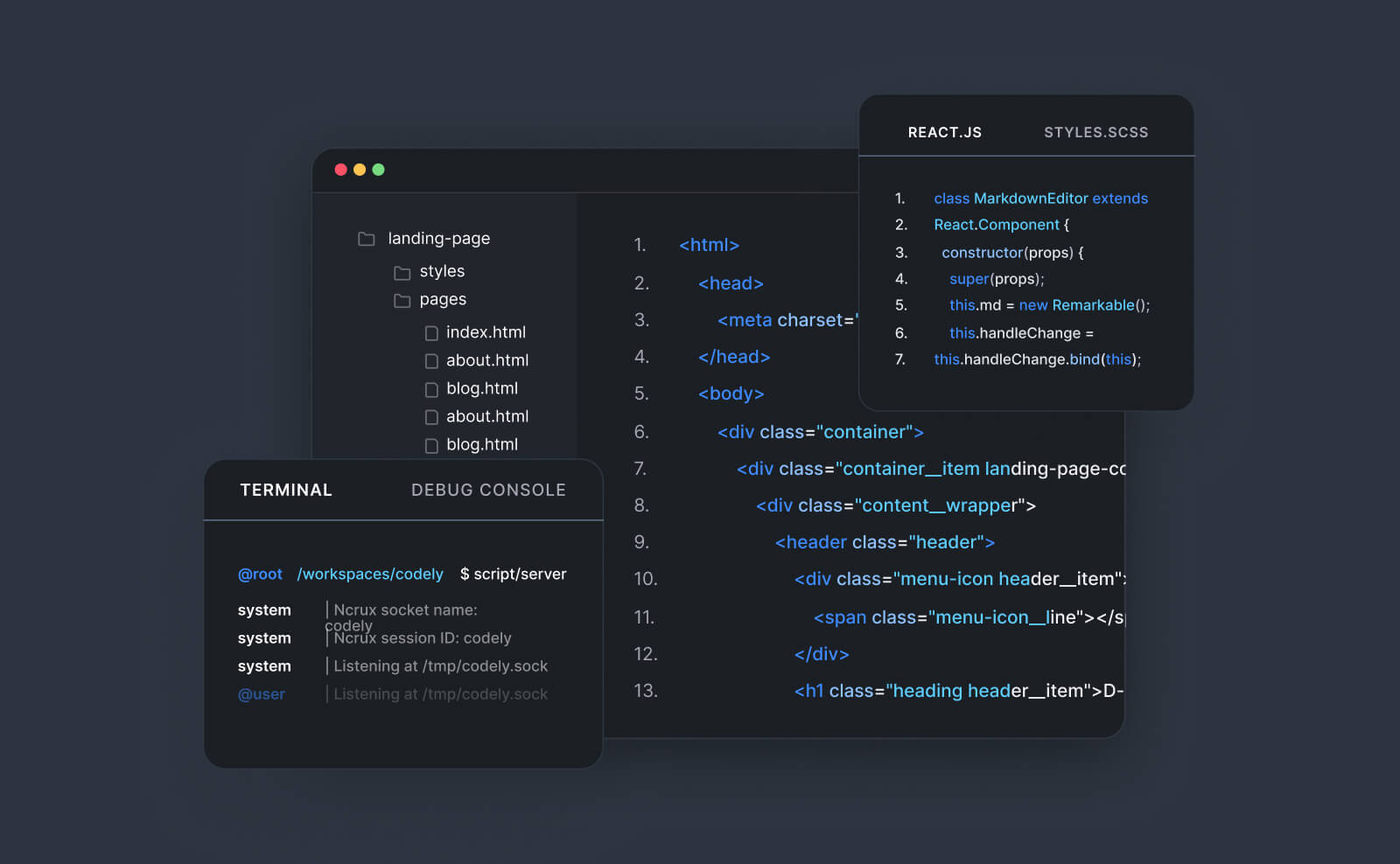
#1 VS Code by Microsoft
At risus viverra adipiscing at in tellus integer feugiat nisl pretium fusce id velit ut tortor sagittis orci a scelerisque purus semper eget at lectus urna duis convallis. Porta nibh venenatis cras sed felis eget neque laoreet suspendisse interdum consectetur libero id faucibus nisl donec pretium vulputate sapien nec sagittis aliquam nunc lobortis mattis aliquam faucibus purus in.
- Neque sodales ut etiam sit amet nisl purus non tellus orci ac auctor
- Adipiscing elit ut aliquam purus sit amet viverra suspendisse potenti
- Mauris commodo quis imperdiet massa tincidunt nunc pulvinar
- Adipiscing elit ut aliquam purus sit amet viverra suspendisse potenti
#2 Sublime Text Editor
Nisi quis eleifend quam adipiscing vitae aliquet bibendum enim facilisis gravida neque. Velit euismod in pellentesque massa placerat volutpat lacus laoreet non curabitur gravida odio aenean sed adipiscing diam donec adipiscing tristique risus. amet est placerat in egestas erat imperdiet sed euismod nisi.
“Nisi quis eleifend quam adipiscing vitae aliquet bibendum enim facilisis gravida neque velit euismod in pellentesque massa placerat”
Wrapping up the article
Eget lorem dolor sed viverra ipsum nunc aliquet bibendum felis donec et odio pellentesque diam volutpat commodo sed egestas aliquam sem fringilla ut morbi tincidunt augue interdum velit euismod eu tincidunt tortor aliquam nulla facilisi aenean sed adipiscing diam donec adipiscing ut lectus arcu bibendum at varius vel pharetra nibh venenatis cras sed felis eget.
The honest answer: it depends on your time horizon
Blogging has a reputation problem among freelancers — plenty of advice insists you must blog, and plenty of freelancers try it, get no visible results after a few posts, and quit. Both the advice and the disappointment usually miss the same thing: blogging's ROI is real but slow, and evaluating it on a short time horizon almost always looks like a waste.
Where the ROI actually comes from
Compounding search traffic, not viral moments
A blog post rarely drives meaningful traffic in its first week. What it can do, if it genuinely answers a specific search query well, is rank slowly over months and then keep bringing in relevant visitors indefinitely — without any additional effort after it's published. That compounding is the actual mechanism, and it's invisible if you're checking analytics after two weeks.
Lead qualification, not just lead volume
A prospective client who found you through an article you wrote about their specific problem arrives already trusting your expertise on that exact topic — a meaningfully warmer lead than one from a cold outreach message or a generic portfolio browse. Blog-sourced leads tend to convert at a higher rate for this reason, even when the volume is modest.
The realistic time investment
A genuinely useful, well-researched article takes 2-4 hours to write for most freelancers — more if it's on an unfamiliar topic, less once you have a repeatable process. At one article a month, that's a modest, sustainable time commitment, not a second job.
The mistake that kills most freelancer blogs isn't the time cost — it's inconsistency. A blog with three posts, abandoned after two months because "nothing happened yet," never gets far enough into the compounding curve to show results. A blog with twelve modest, specific posts published consistently over a year almost always does.
When blogging genuinely isn't worth it
- Your client acquisition already comes reliably from referrals or a platform (agencies, marketplaces) where a blog adds little
- You genuinely can't sustain even one post a month without it displacing paid client work
- Your niche has almost no search volume for the problems you solve — some very narrow B2B niches genuinely don't have search-driven demand
"The freelancers who conclude blogging 'doesn't work' almost always stopped before the compounding curve had time to bend upward."
The actual verdict
For most freelancers with any search-driven demand in their niche, blogging has a real, positive, but slow ROI — worth a modest, consistent time investment, and a poor fit for anyone expecting fast results. Judge it over a year, not a month.
Contractly Pro handles the admin side of freelancing so you can spend the time you save on marketing efforts like this one. Try it free →
Emile Ndagijimana
Senior Full-Stack Engineer based in France with 10+ years building enterprise systems for insurance, consulting, and international organisations. Founder of Contractly Pro — a contract management SaaS built end-to-end in .NET and Angular.